
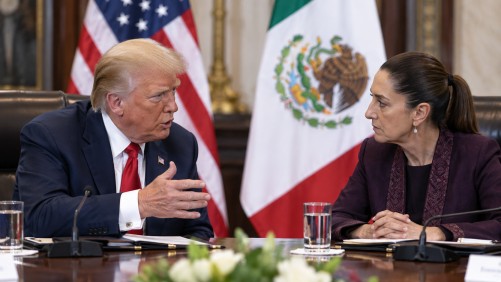
The ongoing issue of drug trafficking between Mexico and the United States has prompted U.S. President Donald Trump to call for more stringent measures from the Mexican government. Despite some progress acknowledged by Trump, including increased drug seizures and the dismantling of clandestine laboratories by Mexican authorities, the U.S. administration believes that more aggressive action is needed to combat the influence of criminal organizations.
In a recent communication to Congress, Trump addressed the efforts made by Mexican President Claudia Sheinbaum’s administration, praising their deployment of additional security forces along the U.S.-Mexico border. However, he emphasized that these steps are insufficient to tackle the robust operations of drug-trafficking organizations and their complex financial networks.
Trump highlighted the importance of identifying and prosecuting public officials in Mexico who are allegedly assisting these criminal groups. He stressed that enhanced enforcement is essential to curb the activities of these organizations, which are known to operate over extensive territories within Mexico.
The statement from the U.S. President places Mexico alongside other nations such as Canada and several Central American and Caribbean countries, including Guatemala, Honduras, El Salvador, Haiti, the Dominican Republic, Jamaica, and Belize. These nations have been identified by the U.S. government as major transit points or producers of illicit drugs.
This call to action underscores the ongoing challenges in addressing drug trafficking at an international level and reflects Washington’s broader strategy to curb the flow of illegal substances into the United States. The determination aims to intensify collaborative efforts in tackling the deeply rooted networks that facilitate drug distribution across borders.