
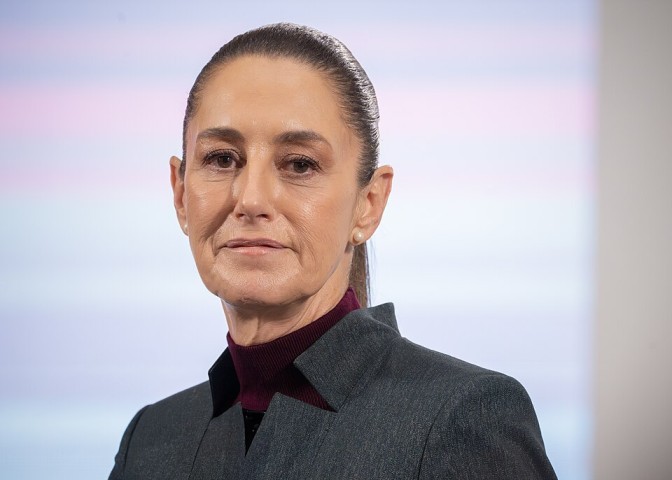
Mexico’s President Claudia Sheinbaum is facing increased scrutiny following the surrender of two former high-ranking officials from Sinaloa state to U.S. authorities. These officials, Gerardo Mérida Sánchez, the former security minister, and Enrique Díaz Vega, the former finance minister, are both affiliated with Sheinbaum’s Morena party and have been linked to the notorious Sinaloa cartel. Mérida was apprehended in Arizona after crossing the border, while Díaz was detained in New York. Their arrests are part of a broader indictment involving ten Sinaloa officials, including Governor Rubén Rocha Moya, who are accused of facilitating the smuggling of illegal drugs into the United States.
Governor Moya has dismissed these allegations as baseless, and President Sheinbaum has consistently rejected extradition requests for him, demanding more concrete evidence from U.S. authorities. Emphasizing her commitment to national sovereignty, Sheinbaum has denied any association between her administration and organized crime. “We’re not going to cover for anyone under any circumstances,” she stated, while also criticizing the U.S. for focusing on Mexican issues instead of addressing its domestic challenges like drug consumption and weapon trafficking.
The recent detentions of Mérida and Díaz pose a challenge for Sheinbaum, as it complicates her efforts to shield her party and Moya, a close ally of former president Andrés Manuel López Obrador. Arturo Sarukhán, a former Mexican ambassador to the U.S., noted the growing perception in Washington that Sheinbaum is stalling. He warned that others implicated in the indictment might seek deals with U.S. law enforcement, potentially revealing damaging information about Morena. Eduardo Guerrero, a Mexican security analyst, pointed out that the voluntary surrender of the officials lends credibility to the charges against them.
The situation in Mexico is growing more complex, as the U.S. intensifies its pursuit of corruption within the Mexican government. Recently, Terry Cole, the Drug Enforcement Agency (DEA) administrator, indicated that Governor Rocha’s indictment is merely the beginning of a wider investigation. Additionally, the New York Times reported that the Trump administration had urged prosecutors to use terrorism laws against corrupt Mexican officials, as conveyed by associate deputy attorney general Aakash Singh.
Despite Sheinbaum’s previous concessions to U.S. demands, such as deploying troops to control immigration and extraditing cartel members, relations have soured due to revelations of clandestine CIA operations in Mexico. These developments have strained Sheinbaum’s rapport with Washington, pushing her administration to a critical juncture. Sarukhán likened the situation to a series of dominoes, warning that the continuous pressure might lead to further complications for Sheinbaum and her party.