
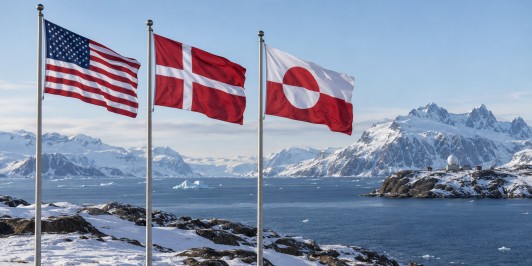
The strategic significance of Greenland in Arctic security has once again come to the forefront as the United States, Denmark, and Greenland have reached a new trilateral agreement. Signed during the United Nations General Assembly in New York, this accord aims to bolster security cooperation in the Arctic and North Atlantic regions without altering Greenland’s sovereignty status.
Central to the agreement is the expansion of the U.S. military presence on Greenland, a self-governing territory within the Kingdom of Denmark. The deal permits the establishment of new defense areas in Narsarsuaq and Mestersvig and authorizes the development of a “Golden Dome” missile defense system. These developments are poised to significantly extend U.S. military infrastructure, marking the most substantial expansion since the Cold War era.
Amending the 1951 U.S.-Denmark defense agreement, the pact also facilitates broader access for U.S. aircraft and naval vessels across Greenland and its territorial waters. Additionally, it imposes measures to prevent non-NATO countries from setting up military installations on the island and restricts foreign investment in sectors critical to national security, such as infrastructure and resource extraction.
The agreement underscores Greenland’s right to self-determination and maintains the sovereignty and territorial integrity of the Kingdom of Denmark. However, it still requires approval through parliamentary procedures in both Denmark and Greenland to come into effect. This development follows heightened tensions after U.S. President Donald Trump previously expressed interest in purchasing Greenland, citing its strategic position and resource potential.
Greenland’s location between North America and Europe and its wealth of mineral and energy resources make it a pivotal area for security interests. The U.S. already operates the Pituffik Space Base in northwestern Greenland, and this new agreement could further integrate Greenland into U.S. defense strategies in the region.