
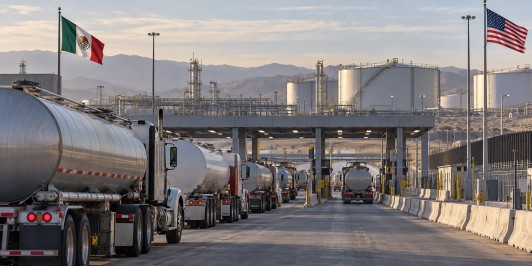
Mexico is grappling with concerns over its fuel supply amid potential changes in U.S. export policies. U.S. President Donald Trump has expressed support for a proposal to limit diesel exports as a strategy to combat rising fuel prices in the United States. This development poses a significant challenge for Mexico, a country that heavily depends on U.S. diesel imports to meet its energy needs.
In June 2026, Mexico imported approximately 288,000 barrels of diesel per day from the U.S., which accounted for over 40% of the nation’s diesel demand. The possible restriction on U.S. diesel exports means Mexico could face increased transportation and logistics costs, prompting the need to explore alternative import sources and enhance its domestic refining capabilities.
To mitigate these risks, the Mexican government has indicated that its domestic refining network could play a crucial role in maintaining adequate fuel supplies. Additionally, Mexico continues to implement fuel subsidies and price-support measures while evaluating strategies to bolster domestic production and storage capacity.
In the U.S., the administration is weighing the feasibility of a full or partial ban on diesel exports. However, U.S. Energy Secretary Chris Wright cautioned that such a move could inadvertently lead to complications with the supply of other fuels and potentially elevate prices further.
As Mexico navigates these uncertainties, it may be compelled to reduce its reliance on U.S. diesel by diversifying its import sources and investing in its refining infrastructure, ensuring a more resilient energy landscape in the face of shifting international policies.