
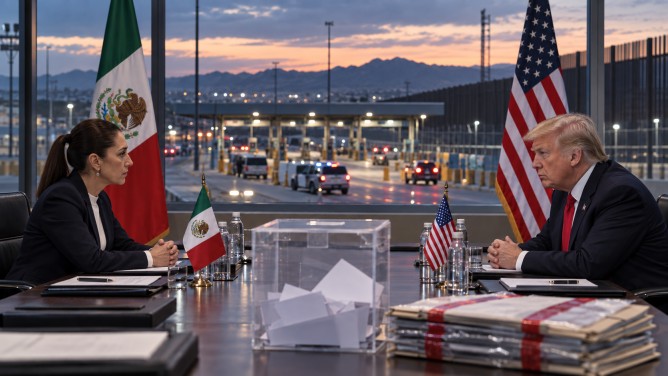
As both Mexico and the United States gear up for key elections, diplomatic tensions are rising, driven by disputes over drug trafficking and corruption. The administration of U.S. President Donald Trump has intensified its pressure on Mexico, accusing the neighboring country of inadequate action against the illegal drug trade and insufficient prosecution of officials allegedly tied to organized crime. This issue has been thrust into the spotlight as a significant point of contention in the lead-up to the U.S. midterm elections in November.
In response, Mexican President Claudia Sheinbaum has pushed back against what she perceives as unwarranted interference from the U.S. She emphasizes that Mexico is actively tackling organized crime and corruption while also voicing concerns about national sovereignty. Additionally, her administration has called for the U.S. to do more in curbing drug distribution, money laundering, and the illegal flow of firearms into Mexico.
The friction between the two nations escalated following U.S. legal actions against Mexican officials accused of connections to criminal organizations, alongside the revocation of visas for several Mexican politicians. Sheinbaum has publicly questioned whether these moves by Washington are politically motivated, further fueling the tension between the two countries.
Amidst these international disputes, Sheinbaum’s government is taking internal measures to address crime and corruption. Efforts include targeting suspected criminal networks and urging the ruling party, Morena, to tighten background checks and enhance financial disclosure requirements for political candidates. These steps are part of a broader strategy to address domestic allegations of “narco-politics” and the perceived links between organized crime and political figures.
As the political landscape in Mexico becomes increasingly charged, opposition groups have seized upon these allegations to challenge Morena ahead of Mexico’s 2027 elections. The ongoing cross-border dispute not only influences political narratives in both countries but also underscores the complex interplay of crime, politics, and international relations.