
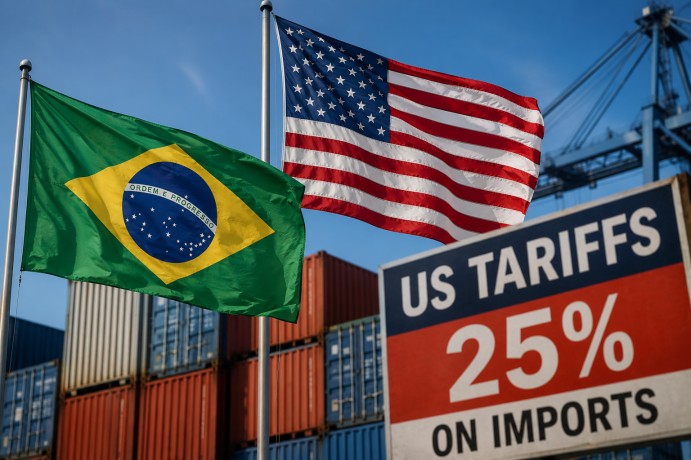
The Brazilian government has expressed strong disapproval of the United States’ decision to implement a 25% tariff on certain products imported from Brazil, effective July 22. Officials in Brazil have labeled the decision as unwarranted and firmly denied claims that the country engages in unfair trading practices. According to an official statement, Brazil maintains that it operates within fair trade guidelines and opposes the tariff measures announced by the United States.
The tariffs are set to affect a selection of Brazilian imports. However, some key products have been excluded from this measure to prevent disruptions in the supply chain. These exempted goods include coffee, beef, oranges, orange juice, specific oil and gas products, and aerospace components. The US Trade Representative explained that the tariff imposition comes after an investigation which pointed out that Brazil’s trade practices are unfair, citing inadequate anti-corruption enforcement and unreasonable trade policies as contributing factors.
US officials have indicated that the tariffs aim to create a level playing field for American businesses and workers. Despite the new trade barrier, the door remains open for discussions with Brazil, suggesting that negotiations can still take place. Meanwhile, US Secretary of State Marco Rubio has criticized the Brazilian government under President Luiz Inácio Lula da Silva, accusing it of not negotiating sincerely. He argued that the economic policies of Brazil have had adverse effects on both Brazilian and American interests.
Brazil, on its part, continues to reject the allegations made by the United States and stands firmly against the new tariff measures. The Brazilian authorities maintain that they have acted in good faith and are committed to fair trade practices, opposing the narrative put forth by their American counterparts. With tensions high, the future of trade relations between the two nations remains uncertain as they navigate these complex economic disagreements.